Monday, February 13, 2017

Arrival (2016) inspires beauty and terror in humanity

Film blog Arrival movie review
Photo Credit: Arrival / Paramount Pictures
Aliens invading Earth forces humanity to take drastic action. Suspicion and premature counter-attacks are sparked by world leaders and civilians trying to protect themselves. What do we do to quell panic? get answers? defend our turf? Director Denis Villeneuve tackles the complexity of humanity in Arrival.

Based on Ted Chiang's short story Story of Your Life, linguist Dr. Louise Banks (Amy Adams) and physicist Ian Donnelly (Jeremy Renner) are recruited into a special military operation to communicate with the creatures which initially harbor ill intentions. Together, the duo work with other countries to prevent war.

The science fiction genre has had a rough go recently. Audiences can mostly count on a franchise like Star Wars to transport them to another galaxy, while others have failed to live up to the hype like Independence Day: Resurgence. Ones that aren’t quite so loud like Interstellar, which invites big ideas about human nature falls short either in the story or execution. There isn't a 'wrong kind' of sci-movie, but quietly, with its characters, story, and interaction with extraterrestrial beings, Arrival hits all of the right notes.

For one, the ever dependable Amy Adams leads with grace and complexity. Louise is wholly composed character when the end of the world hits, sticking to her normal routines like lecturing her classes and watching the news in her office. When she’s recruited by Colonel Weber (Forest Whitaker), that same sense of perseverance continues even as the government's higher-ups are counting on her to deliver. She’s resourceful to go about making contact the right way, and through her progress, we see her confusion and trepidation in a fractured environment.

Her quest isn’t about needing to see or speak to the aliens, but the beauty of language and how all races can try to understand one another. Language isn’t only verbal: it’s symbolic, visual, emotional, changes time, and derives from the intention of the giver by the receiver. You learn from the other person as you much as you may learn about yourself. Open lines of communication between person to person and country to country is vital whether or not there is an impending war going on between humans or against unknowable beings. There is beauty and terror in having the patience to not immediately go on the defensive. Even if the world itself takes a bleak turn, eerily mirroring our own shortcomings as well as our ability to connect and discover, Banks's expedition is one of endurance and tenderness.

The film's atmosphere is haunting and ethereal. Despite how chaotic the world becomes from these foreign visitors, the production design and the hypnotic score gives the journey a sense of awe and curiosity. The alien's tetrapods, in particular, are fascinating. From the outside, they are massive cocoons hovering mere feet off the ground, and inside, resemble a television stuck on a static channel as they communicate in Rorschach-test blots. The film's coloring may be muted, but the cinematography is vast as if Banks is just on the cusp of discovering life-changing secrets. The movie takes place on Earth, but one feels like we've been transported to another world.

Villeneuve has become one of the most popular directors by critics in recent years, and it’s not difficult to understand why. He has a keen sense of creating and world-building abstract ideas into intimate stories. This tale of aliens landing is gripping and patient, filled with love, hope, and determination. Almost above all else, Arrival explores human and non-human conflicts to provoke questions, and it's truly one of the best in a long time.

Rating: ★★★
Similar to: Close Encounters of The Third Kind
Have you seen Arrival? What are your thoughts?

Saturday, February 11, 2017

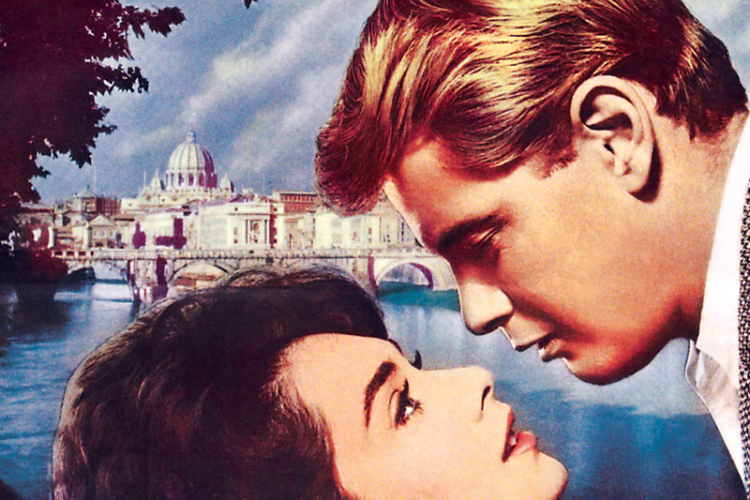
Rome Adventure (1962) offers a languid visual treat

Rome Adventure movie review
Photo Credit: Rome Adventure / Warner Bros.
New England librarian Prudence Bell (Suzanne Pleshette) resigns from her school after she's criticized for recommending a racy book Lovers Must Learn as part of the curriculum. Yearning for independence and navigating the art of love, a cruise to Italy introduces more courtships than she expected - Albert Stillwell, a nerdy student of Etruscan history, older perfect Roman lover Roberto Orlandi (personally my favorite), and a perfect hunky All-American Don Porter (Troy Donahue).

As a melodramatic journey of 1960s morals about love, sex, and chivalry, Rome Adventure is a picturesque romantic drama. Trailing the ingenue through her experiences, the movie travels at a leisurely pace. Using Europe as a captivating backdrop, Bell weaves in and out of the nooks of crannies of not only the country but desire, attraction, and friendship.

Beyond the geographical and human eye-candy of the male co-stars, Suzanne Pleshette is absolutely charming, and hard to believe with her grace and maturity, just twenty-five years old. Not experienced in love or romance, her character learns a lot about herself as an individual and as someone else's half, which makes her relatable. She's challenged to re-evaluate her self-value passed pure sexual attraction, a glamorous wardrobe, or an ethereal sophistication. Pleshette's doesn't necessarily give a powerhouse performance, nor does the direction really call for it, but her subtle expressions convey so much, it's hard not to be completely hypnotized by her presence.

Though Bell's earnest dalliances are fairly predictable, she shares a variety of camaraderie and courtships with all of her encounters. The chemistry  that absolutely sizzle on-screen is between Pleshette and Donahue. So much so, it's not hard to believe they married in real life after filming wrapped, though their off-screen relationship only lasted eight months.

Besides Pleshette, the production design makes up for the story's languid pace. Every frame captures the rich landscape of Italy, Switzerland, and other European landmarks allowing the cinematography to completely take you away. Someone get me a travel agent and tell them I want the Rome Adventure tour. As well, the costume design is to-die-for. No matter how unhurried the movie might be, Bell's summer getaway prudently plants the same ideas that Italy can be the place to fall in love.

Contrary to the title, Rome Adventure doesn't have an exciting bone in its body. The story is, by all means, a steady, old-fashioned drama topped with a little bit of humor and sexuality. But the leading lady and production is what will sweep you off your feet.

Rating: ★★☆
Similar movies: Under The Tuscan Sun
Have you seen Rome Adventure? What are your thoughts?

Thursday, February 9, 2017

Gilderoy Lockhart Chocolate Frog Card Reveal

Gilderoy Lockhart Chocolate Frog Card
One of my favorite things to do on magical trips to Wizarding World of Harry Potter Orlando is to collect chocolate frog cards - the snacks Harry and his friends enjoy on their trips to Hogwarts and Honeydukes.

Recently, I attended A Celebration of Harry Potter, where Universal Studios revealed new merchandise for their theme parks. One of the items I couldn't wait to get was the Gilderoy Lockhart chocolate frog card!

Tuesday, February 7, 2017

A Celebration of Harry Potter 2017

A Celebration of Harry Potter 2017
For the past few years, Universal Studios has held A Celebration of Harry Potter event at their theme parks in Florida. For an entire weekend, wizards and witches celebrate the Harry Potter books and movies at Universal Orlando and Islands of Adventure through demonstrations, Q&A’s and exhibits.

I’ve been very lucky over the past few years to attend, and this year was no exception. Though I was only able to attend one day and aimed to pack in as much as possible, the event is held over three days. If I could’ve apparated to both parks I would’ve, but chose to stay at Universal Orlando to visit two of their expos and a cast Q&A.

The day started off early with getting line for the first expo. Inside, Scholastic, Warner Bros Studio Tour, the Harry Potter Exhibition, and MinaLima had individual exhibits.

Tuesday, January 31, 2017

5 Problems Once Upon A Time Needs To Fix

When a new season of Once Upon A Time whirls around, there's promising adventures to behold. Savior Emma Swan and her charming parents and son, swash-buckling boyfriend Hook, and Evil-Queen-turned-Hero Regina face off against 'fictional characters' re-imagined for the real world. And, the series' ability to plant powerful messages of hope, courage, and love is refreshing compared to darker-themed shows.

However, there is no doubt the fandom has been struggling. As much love as there is for Once Upon A Time, the storytelling  often falls down a rabbit hole of messy writing and confusing world-building. Off-screen, the show dropped in ratings and stars like Robert Carlyle and Jennifer Morrison are considering not returning. When rumors swirled over the holiday break that the series might be canceled, it wasn't surprising to ONCERS despite what a rotten apple the news was. But as the show has taught us over the years: there is always hope - we just have to look and fight for it. Here are five ways Once Upon A Time can break its own curse.

Monday, January 23, 2017

Jackie (2016) elegantly reshapes American royalty

Photo Credit: Jackie / Fox Searchlight Pictures
Ask anyone of the Baby Boomer generation, and chances are they'll recall the day President John F. Kennedy was killed and how the news reverberated around the U.S. Even though history has cemented the family's legacy, as well as Jackie as a style icon, time itself, has rarely scratched the surface of the former First Lady Jacqueline Kennedy's experience. That's where the intimate, poignant biopic Jackie steps in.

On November 22nd, 1963, Jack Kennedy and his wife Jackie were on a political tour through Texas when he was violently assassinated. Following Jackie through this horrendous ordeal, arthouse director Pablo LarraĆ­n dismisses the blind patriotism many biopics have taken before and dives into a non-traditional portrait of Mrs. Kennedy with a beautiful existential approach to trauma.

Swinging back and forth between the past and present, Jackie (Natalie Portman) dictates her memory of what happened on that fateful day and the immediate aftermath to Life journalist Theodore H. White (Billy Crudup). In giving the epilog of Jack's political career and her transition out of the White House, it reveals her grace under fire as she salvaged the lasting impression of her husband to grieving nation.

When movies recognize Jacqueline, it's often as the great woman behind the man, but rarely does it delve beyond the iconography of the infamous Pink Suit or the unforgettable black veil during her husband's funeral. In sculpting the final hours of his legacy we see the woman both privately and publicly.

In the midst of the tragedy as everyone looking to Jackie, it's difficult to imagine there was a time when the American Public didn't warm up to Jackie. But in the beginning of Jack's political career, her debutante behavior was actually a turn-off because she wasn't in the kitchen. In an eery premonition, her major role as First Lady was restoring the White House as a museum to deceased Presidents; elevating what was a home and workplace for the husband into a showcase of history. In almost an instant, her life becomes a question of preserving her family.

Jackie puts on quite the performance. The woman called to respond to Jack's death in front of the country is different to who she is in private to her staff, the press, Lyndon B. Johnson and his wife, Bobby Kennedy (Peter Sarsgaard), and her children. With each approach, she must consider what woman is expected of her as a new administration anxiously takes over, and she moves out of the White House.

All of this revolves around Natalie Portman who gives a demure and chilling performance. It's almost immediately forgotten that she is playing such a familiar figure. Her portrayal of Jackie isn't reserved to just imitating her voice or the physical mannerisms, but a greater reveal of anger, regret, shame, happiness, joy, prideful, and bitter rolling out in waves as the plot gradually builds to the literal shot heard around the world. As everyone around her is numbed into inaction, she's the one who takes the reigns, no matter how much everything weighs on her. Portman captures this essence of feeling like a ghost lingering in history and the classy, regal force that'll be remembered.

Between Jackie's moments by herself, with her staff, or in front of the nation, barriers are crossed between the audience and its subject. Her post-traumatic stress and bereavement are brushed in all different strokes of contemplative calm and terror. A cold formality lingers in the aftermath of the fatality with the grand procession and majesty of his burial. The lengths she goes to pursues the question if it was for her husband's benefit, to quench her own ego, or mourn with the public. Using original and archived historical footage, as well as a haunting score by Mica Levi, Lorrain's sweeping film is an intimate and haunting biopic. It's not a typical examination of worshiping the Kennedys and recognizes that Jackie in the movie is different to how we see or imagine her as outsiders. Jackie is an ethereal monument to a woman who shaped American royalty.

RATING: ★★★
Have you seen Jackie? What are your thoughts?

Monday, January 16, 2017

Christine (2016) tragically predicts our sensationalist world

Photo Credit: Christine / The Orchard
Based on a true story, Christine Chubbuck (Rebecca Hall) is an ambitious journalist for a local Sarasota tv station. Her immense dedication to simple yet meaningful human interest pieces is compromised when upper management intends to increase ratings for sensationalist news. 'If it bleeds, it leads' becomes the new standard, and Chubbuck struggles to match the style going as far as killing herself on-air.

Despite knowing the outcome of Chubbuck's life for this biopic, Christine intensely and thoughtfully delves into her mindset and struggles, especially mental health.

Just shy of her 30th birthday, Chubbuck is a person unto herself. She's never been involved with someone romantically, closes off from potential friendships, and has a complicated relationship with her mother. Getting married and having children is on her future itinerary, but it's sideswiped by plaguing health issues both physical and emotional. A lingering depression pushes her perseverance in the best and worst ways from an iron-fist like grip on her standards to an inability to communicate her needs to others. Despite her wanting more personal relationships, she's left with only a job, one of the utmost integrity in her eyes, to occupy her time which becomes the last thing she has to hold onto.

Rebecca Hall gives a tremendous performance portraying Chubbuck's downward spiral. Much of her character's personality and behavior is internalized. She has a tough time expressing herself to others, and when she does it's self-deprecating, retaliatory, or as harsh bursts of judgment towards herself. Both professionally and personally, Chubbuck continually asks questions, but tries to possess all the answers; a misfit who tries so hard to act as normally as everyone else does. Self-inflicted and environmental pressure weigh on her ability to handle and control what goes on in the studio, at home, and during telecasts. Hall's portrait is passionate and subtle capturing multiple sides of how her character feels: kindness, sympathy, detail-obsessed, hard-working, burdensome, self-conscious. She doesn't limit herself to one trait or another but undergoes many different emotional hurdles at once.

Like mental health itself, Chubbuck's struggles are a conglomerate of issues. In contrast to Chubbuck, other characters like Maria Dizzia (Jean Reed), weatherman Steve Turner (Timothy Simons), and on-air anchor George Peter Ryan (Michael C. Hall) have faced obstacles, but found ways to cope or "not dwell on everything". There's a nice mix of people surrounding Chubbuck who try to be her friend or let her be her own person. Before the inevitable ending, the movie hints at possibilities if she didn't judge herself too harshly or unloaded her burdens onto someone without feeling burdensome, if she got fuller treatment for her depression. There's no way of knowing what could've happened if her life played out differently, but the brief inclusion shows the script's thoughtfulness to its leading character.

Christine as film is a fascinating feat as a biopic considering Chubbuck's life isn't well-documented. Screenwriter Craig Shilowich interviewed previous colleagues and researched news pieces to create what he could of Chubbuck. He also connected to her depression making the project a personal examination of his own experiences, and one that movie goers who suffer from depression may relate to it deeply. Considering how many biopics over-indulge in someone's life to justify the commercial appeal, the movie is an impressive and intimate character study.

Director Antonio Campos adequately recreates the 1970s from the news stations equipment, occasional overgrown sideburns, and flared pants. The era serves mostly as a backdrop to its leading lady. At most, when Chubbuck concocts an idea to try to fit in with the new rules, the soundtrack kicks in with a catchy news-track similar to what a viewer would hear turning into News Update from Saturday Night Live or 60 minutes. Her life was her job, and it fittingly plays into Chubbuck's 'grasping at straws' brainstorming and avoids being a cheap attempt to be more stylistic.

A common criticism is the film's "exploitative nature", which wasn't the case at all to me. Softly in the background, the story focuses on sensationalism turning into "hard hitting news", mostly on Chubbuck's attempts to be promoted and her work validated. On the cusp of Watergate, and history forever holding it up as a daring example of journalism, the era's sexist nature ultimately cups her ambition - no matter the desperate lengths she goes to. Adding to the depth of her death, Chubbuck is more of a prophet having seen the graphic nature news would venture, and she wanted to hold onto her integrity. Regardless of her fate, culture carved its own path, fueled by click-bait titles and attracting readers into violent-gossipy articles to make gruesome acts appear glamorous. The movie doesn't make her a poster-girl for how our world would turn out, leaving the parallels of the media and her final moments a poignant tragedy.

Many celebrities or public figures, maybe even people we know or are well-acquainted with, who suffer a downward spiral aren't looking for fifteen minutes of fame as the news often reports; they're crying out to be seen and heard. This point is well-established throughout, and it's difficult to not feel relatable to her in many ways. Slow-burning and tactful, Christine is a fascinating examination of a woman in a man's world, her mental illness, and going to extremes as a devastating last resort.

RATING: ★★★
Have you seen Christine What are your thoughts?